Navigating Senior Care: Indications Your Loved One Requirements Memory Care Rather of Assisted Living
Business Name: BeeHive Homes of Grain Valley
Address: 101 SW Cross Creek Dr, Grain Valley, MO 64029
Phone: (816) 867-0515
BeeHive Homes of Grain Valley
At BeeHive Homes of Grain Valley, Missouri, we offer the finest memory care and assisted living experience available in a cozy, comfortable homelike setting. Each of our residents has their own spacious room with an ADA approved bathroom and shower. We prepare and serve delicious home-cooked meals every day. We maintain a small, friendly elderly care community. We provide regular activities that our residents find fun and contribute to their health and well-being. Our staff is attentive and caring and provides assistance with daily activities to our senior living residents in a loving and respectful manner. We invite you to tour and experience our assisted living home and feel the difference.
101 SW Cross Creek Dr, Grain Valley, MO 64029
Business Hours
Families generally do not get up one early morning and choose, "It is time for memory care." The choice creeps up slowly, covered in little modifications that are easy to explain away. A missed expense here, a burnt pan there, a story duplicated 3 times in an hour. For a while, it feels manageable. Then, at some time, a line gets crossed. Safety, dignity, and every day life are no longer dependably supported in a traditional assisted living setting.
Recognizing when that line has been crossed is hard, both mentally and almost. The distinction between assisted living and memory care is not practically how forgetful someone is, or whether they have a formal dementia medical diagnosis. It is about threat, support, and how well an environment really matches what your loved one can still do.
I have sat with numerous families at that crossroads, some who moved prematurely, numerous who waited too long. The ones who found the best course were not the ones with the least regret or the most resources. They were the ones who discovered to check out the indications, asked difficult concerns, and looked beyond labels like "senior care" or "elderly care" to believe carefully about fit.
This article walks through those signs, the real differences in between assisted living and memory care, and the function of respite care when you are not rather sure what comes next.
Assisted Living vs Memory Care: What In Fact Changes
On paper, both assisted living and memory care are forms of senior care that supply housing, meals, and aid with everyday tasks such as bathing, dressing, and medication. The differences reside in the details of how they are staffed, secured, and structured.
Assisted living is developed for older adults who are mainly physically steady and can participate in their own regimens, but require help with some activities. They may require suggestions to take medications, assistance getting in and out of the shower, or assistance with housekeeping and meals. Staff check in, however citizens typically have a fair quantity of independence and free motion around the building and grounds.
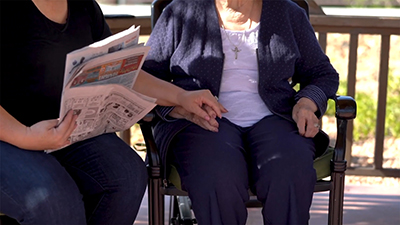
Memory care, by contrast, is constructed around individuals with Alzheimer's disease or other kinds of dementia who have substantial cognitive modifications. The physical environment is generally more safe, sometimes with locked doors or kept an eye on exits, not to send to prison people however to avoid unsafe roaming or getting lost. Personnel get customized training in dementia care, communication strategies, and behavior management. Every day life is more structured, with foreseeable regimens and activities tailored to people who may not initiate jobs on their own or remember instructions.
Families sometimes assume that "assisted living with memory care services" suggests a single, flexible design. In practice, lots of communities have two really different areas: a basic assisted living side, and a different dedicated memory care unit with its own style and staffing. Moving from one to the other is not just an internal transfer. It requires psychological adjustment, new relationships, and sometimes a different monetary structure.
Understanding that difference is important, since it shows why some needs can be consulted with a few extra assistances in assisted living, while others truly require a memory care environment.


When Forgetfulness Becomes a Security Problem
Everyone loses keys. Even healthy older adults duplicate stories or struggle periodically with names. That alone does not signify the requirement for memory care.
The shift towards memory care typically begins when cognitive modifications stop being quirks and start creating danger. A couple of situations I see typically:
A resident in assisted living begins leaving the stove on, often with towels or paper bags close by. Staff can add reminders, eliminate particular devices, or institute security checks. When that is still not enough, and the individual does not keep in mind to comply with safety strategies, it indicates a much deeper issue.
Another resident calls the front desk every half hour due to the fact that she can not remember where she is or why she remains in this structure at all. Staff reassure her repeatedly, however the distress does not reduce. It spills over into nighttime, with regular awakenings and roaming into other homeowners' spaces. She is not simply forgetful, she is disoriented.
A 3rd resident starts implicating caregivers of taking, rearranging furnishings in odd methods, hiding items in the freezer, and trying to leave the building due to the fact that "this is not my home." Anxiety and suspicion trip on top of amnesia, and peace of mind works just briefly.
In each case, the genuine problem is not just that memory is declining. It is that the assisted living environment is no longer designed to match the individual's internal truth. The resident requirements a setting where safety is incorporated into the style, where staff anticipate and understand these habits, and where routines assist to relieve confusion instead of magnifying it.
Key Signs Assisted Living Might No Longer Be Enough
Families often request something concrete: a list or threshold that states, "Now it is time for memory care." No single indication should drive the decision, however when numerous of the following continue despite extra support in assisted living, it is time to reconsider the level of care.
Here is the first of 2 brief lists in this article, focused on patterns that typically signal assisted living is no longer the best fit:
- Frequent roaming or exit seeking, especially tries to leave the structure or consistently going into other homeowners' rooms
- Unsafe behaviors that continue despite adjustments, such as leaving devices on, misusing medications, or managing sharp things unsafely
- Significant disorientation to time or place, such as not understanding where they live, insisting they require to "go home," or thinking departed relatives are still alive and awaiting them
- Ongoing distress, fear, or agitation in the present environment that personnel interventions are not easing
- Increasing requirement for one-to-one tips or guidance that surpasses what assisted living personnel can securely offer to all residents
This list is not extensive, but it shows the kinds of patterns that push staff and families to consider a structured memory care environment.
The Function of Behavior and Personality Changes
Memory loss is only part of dementia. Changes in judgment, impulse control, insight, and personality often cause more difficulty daily than basic forgetfulness.
In early phases, a resident in assisted living might compensate well. They follow hints from others, blend into group activities, and lean on relative for help behind the scenes. In time, though, more subtle shifts can strain the system.
You may notice an once gentle parent ending up being irritable or verbally aggressive when redirected. They may implicate you of lying, firmly insist caretakers are "out to get them," or refuse to bathe since they no longer comprehend why it matters. Staff may report that your loved one is chewing out roommates, withstanding care, or wandering into the dining room partially dressed.
It is natural for households to feel defensive when they first hear these reports. "Mom has constantly been stubborn." "Dad never liked being told what to do." Often that is true, and a few customized methods in assisted living can help. Personnel can change how they approach care, switch caregivers, or add favorite music to routines.
The turning point comes when habits changes stem straight from brain illness in a way that easy adjustments can not reliably manage. For instance, a resident who:
- Regularly becomes physically resistive throughout care, hitting or pressing caregivers without comprehending the danger
- Reacts with extreme fear or agitation when approached, due to the fact that they do not acknowledge personnel or think strangers are trying to undress them
These reactions prevail in dementia, and they do not make your loved one a "issue." They do, nevertheless, need a care group trained particularly in dementia habits, with higher staffing ratios, calm areas to de-escalate, and consistent regimens that decrease triggers. Memory care units are typically much better geared up for this than standard assisted living.
When Evening Becomes Unmanageable
Sleep and sundowning patterns often tip the scale toward memory care. Many individuals with dementia experience increased confusion, agitation, or stress and anxiety in the late afternoon and night. They might pace, call out, or attempt to leave, thinking they require to pick up children or get to work.
In assisted living, where staffing in the evening is lower and homeowners are expected to sleep most of the time, one person's distress can interfere with the entire corridor. Personnel do their finest, but they may be accountable for lots of locals at the same time. A single person who is up, wandering, and needing reassurance every 20 minutes can rapidly surpass what they can securely manage.
In memory care, nighttime routines are typically built with these patterns in mind. Lights, sound levels, and staffing are adjusted. Staff are trained to react to sundowning patterns with comfort procedures, peaceful engagement, and ecological cues instead of entirely medication. There might be safe, enclosed walking paths or little common locations where citizens can move without risk.
If your loved one in assisted living is receiving regular calls about nighttime roaming, falls out of bed, or disruptive behaviors, think about whether they now require an environment where 24-hour supervision is part of the design, not an exception.
Medical Needs vs Cognitive Needs
Sometimes households assume that memory care is for people with "simply memory problems," while assisted living is for those with physical needs. The truth is more nuanced.
Assisted living can support a large range of physical restrictions: walkers, wheelchairs, incontinence, and persistent diseases like diabetes or heart problem. Personnel aid with medications, however they generally do not supply complicated treatment such as IV treatment or ventilators. Those circumstances fall into competent nursing or rehab, not normal memory care or assisted living.
Memory care can also manage a lot of those physical needs, however it layers cognitive assistance on top: cueing, streamlined instructions, repetition, and modified environments. The tipping point towards memory care often shows up when cognitive changes prevent an individual from safely handling their health, even with basic support.
For example, a resident with diabetes may when have actually understood why blood sugar level checks and insulin doses matter. With progressing dementia, they might decline finger sticks, manage keeping track of gadgets, or eat other residents' food without comprehending the risk. In assisted living, this can rapidly become hazardous. In memory care, personnel are trained to incorporate health tasks into foreseeable routines, utilize mild redirection, and create food environments that reduce temptation and confusion.
A strong general rule: if cognitive modifications are the main driver of threat, memory care is more likely to be the right fit, even if physical requirements are modest.
The Hidden Strain on Family and Staff
Many families overestimate what assisted living personnel can do and underestimate what they themselves are doing.
I frequently fulfill adult children who visit daily to fill out the spaces: establishing pill boxes, arranging laundry, soothing their parent after paranoid episodes, or remaining for supper to make certain they in fact consume. The neighborhood may be doing its job, but the safety and psychological stability of the circumstance rests on the household's shoulders.
When those family memory care home BeeHive Homes of Grain Valley supports slip, issues surface area quickly. A daughter who goes on a week-long work trip go back to discover her father dehydrated, more baffled, and unsteady. A kid who usually manages paperwork realizes that his mother declined to let staff in for 2 days, insisting they were burglars.
This is where respite care can be a helpful bridge. Lots of memory care and assisted living communities use short-term stays, from a few days to a few weeks, particularly to provide caregivers a break or to check how a greater level of care fits. Throughout a respite stay in a memory care unit, personnel can observe how your loved one functions in a protected, structured environment. Households typically learn more in seven days of respite care than in months of brief visits.
If you find that your own involvement is the glue keeping an assisted living arrangement together, ask yourself 2 questions:
First, is this sustainable, mentally and physically, for you? Second, if something unexpected kept you away for a week or 2, would your loved one still be safe and supported?
If the honest response to either is "no," it may be time to assess memory care more seriously.
How to Utilize Professional Evaluations Wisely
Most reputable senior care communities will not move a resident from assisted living to memory care without some type of evaluation. This might include the community nurse, a visiting geriatrician, a neurologist, or an outside care manager.
Families in some cases feel protective or evaluated throughout these assessments. It can assist to reframe them as tools, not verdicts. A few tips from what I have actually seen work well:
Share genuine examples, not simply general impressions. Instead of "She gets confused sometimes," discuss the recent incident where she tried to leave the building to "get to the workplace," or the time she called 911 since she believed staff were intruders.
Ask about personnel capability honestly. "Provided your staffing and layout, how many residents like my dad can you securely support in assisted living? Where is the tipping point?"
Bring in outside voices if required. Geriatric care supervisors, social employees, and neurologists can offer a more neutral view, particularly if relative disagree about the level of care needed.
Pay attention to how neighborhoods speak about memory care. Are they explaining it as a place of last option, or as a thoughtfully designed community with activities, regimens, and dignity? That culture matters for quality of life.
Professional assessments are not ideal, but they typically bring up patterns households have stabilized. Use that info to guide choices, not to designate blame.
What Excellent Memory Care Looks and Feels Like
Many households dread the idea of memory care since they imagine locked systems and loss of flexibility. That fear is easy to understand, specifically if their only reference point is older-style centers. The reality has actually enhanced in lots of areas, though quality varies.
In well-run memory care communities, the security exists however subtle. Doors may be protected with keypads or postponed egress, yet hallways are brilliant, embellished with familiar items, and set out in easy loops so homeowners can walk without hitting dead ends. Outside spaces are typically enclosed courtyards, enabling fresh air and movement without risk of elopement.
Staff find out residents' biography: jobs they held, pastimes they loved, music they took pleasure in. Activities are less about official classes and more about significant engagement. Folding towels, watering plants, arranging hardware, or checking out image books can provide a sense of purpose and calm.
Language matters. Personnel who mention "fulfilling individuals where they are" rather than "reorienting them to reality" usually manage confusion with more respect. Rather of arguing that a deceased spouse has passed away, they may say, "Inform me about your partner. You actually miss her," then gently redirect to a photo or a cup of tea.
Family visits can feel various too. Rather of costs every visit fixing practical problems, adult kids can focus more on companionship. They may sign up with a music group, share a snack on the patio, or just sit with their loved one while staff deal with individual care.
When families see this in action, the narrative typically moves. The move to memory care becomes less about "giving up" and more about matching the environment to the individual's present abilities and needs.
Gray Locations and Edge Cases
Not every situation fits neatly into "assisted living" or "memory care." Some people with dementia stay physically robust and socially competent, able to camouflage deficits for unexpected stretches of time. Others have substantial physical requirements however reasonably maintained memory.
In gray areas, think about a few assisting questions:
How rapidly are things altering? A resident with slowly advancing disability who is steady in assisted living, and who responds well to included assistances, may not require to move immediately. Somebody whose function has declined substantially over six months requires a more proactive plan.
Can risks be realistically mitigated? Setting up door alarms, eliminating small appliances, or changing medication timing may purchase time. If those actions require continuous caution to be reliable, they might not be true solutions.
What does your loved one value most? Some people prioritize familiarity and self-reliance, even with more danger. Others focus on predictability and calm. Their long held worths need to inform how much danger you tolerate at home or in assisted living before moving.
In these borderline cases, respite care in a memory unit can be especially informative. A two week stay can expose whether your loved one settles into the structure or ends up being more disoriented by the change. Either result supplies useful guidance.
Practical Actions When You Suspect It Is Time to Move
Once the thought "I think we might require memory care" appears, it hardly ever goes away. Households can feel paralyzed there, unsure how to move from unclear issue to real decisions.
This is the 2nd and last list in this article, focused on concrete next steps:
- Start a habits and safety log, noting dates and short descriptions of incidents such as wandering, falls, or significant confusion
- Schedule an extensive examination with a geriatrician, neurologist, or experienced primary care company, bringing your log and particular concerns about level of care
- Meet with the present assisted living team to ask frankly what they are seeing and what they believe they can safely handle over the next 6 to 12 months
- Tour a minimum of 2 or three memory care communities, preferably at various times of day, to observe interactions, staffing levels, and the total atmosphere
- Explore respite care alternatives, either in memory care or assisted living with boosted support, to evaluate how your loved one reacts before making an irreversible move
These steps provide you more data and lower the sense that you are choosing based on a single crisis or a wave of guilt.
Balancing Safety, Self-respect, and Love
At its core, the choice between assisted living and memory care has to do with stabilizing 3 things: safety, dignity, and love.
Safety without dignity can feel like jail time. Dignity without safety can move into disregard. When households and care groups work together truthfully, memory care can support both, offering an environment where an older adult with dementia can move, engage, and be themselves within limits that keep them from harm.
Love, in this context, in some cases looks like accepting that your role must alter. You shift from being the primary hands-on caregiver to being the historian, supporter, and psychological anchor. Senior care experts handle the day-to-day logistics, while you invest more time on the pieces just you can provide: shared memories, familiar jokes, the specific way you hold their hand.
No checklist or post can make this shift easy. What it can do is help you recognize the indications earlier, understand the alternatives more plainly, and stroll into the conversation with your eyes open.
If you discover yourself asking, "Is assisted living still enough, or does my loved one need memory care?" You are already doing one of the most important things: paying attention. From that beginning point, with careful observation, professional input, and the thoughtful use of respite care and other assistances, you can chart a course that honors both who your loved one has actually been, and who they are now.
BeeHive Homes of Grain Valley provides assisted living care
BeeHive Homes of Grain Valley provides memory care services
BeeHive Homes of Grain Valley provides respite care services
BeeHive Homes of Grain Valley offers 24-hour support from professional caregivers
BeeHive Homes of Grain Valley offers private bedrooms with private bathrooms
BeeHive Homes of Grain Valley provides medication monitoring and documentation
BeeHive Homes of Grain Valley serves dietitian-approved meals
BeeHive Homes of Grain Valley provides housekeeping services
BeeHive Homes of Grain Valley provides laundry services
BeeHive Homes of Grain Valley offers community dining and social engagement activities
BeeHive Homes of Grain Valley features life enrichment activities
BeeHive Homes of Grain Valley supports personal care assistance during meals and daily routines
BeeHive Homes of Grain Valley promotes frequent physical and mental exercise opportunities
BeeHive Homes of Grain Valley provides a home-like residential environment
BeeHive Homes of Grain Valley creates customized care plans as residents’ needs change
BeeHive Homes of Grain Valley assesses individual resident care needs
BeeHive Homes of Grain Valley accepts private pay and long-term care insurance
BeeHive Homes of Grain Valley assists qualified veterans with Aid and Attendance benefits
BeeHive Homes of Grain Valley encourages meaningful resident-to-staff relationships
BeeHive Homes of Grain Valley delivers compassionate, attentive senior care focused on dignity and comfort
BeeHive Homes of Grain Valley has a phone number of (816) 867-0515
BeeHive Homes of Grain Valley has an address of 101 SW Cross Creek Dr, Grain Valley, MO 64029
BeeHive Homes of Grain Valley has a website https://beehivehomes.com/locations/grain-valley
BeeHive Homes of Grain Valley has Google Maps listing https://maps.app.goo.gl/TiYmMm7xbd1UsG8r6
BeeHive Homes of Grain Valley has Facebook page https://www.facebook.com/BeeHiveGV
BeeHive Homes of Grain Valley has an Instagram page https://www.instagram.com/beehivegrainvalley/
BeeHive Homes of Grain Valley won Top Assisted Living Homes 2025
BeeHive Homes of Grain Valley earned Best Customer Service Award 2024
BeeHive Homes of Grain Valley placed 1st for Senior Living Communities 2025
People Also Ask about BeeHive Homes of Grain Valley
What is BeeHive Homes of Grain Valley monthly room rate?
The rate depends on the level of care needed and the size of the room you select. We conduct an initial evaluation for each potential resident to determine the required level of care. The monthly rate ranges from $5,900 to $7,800, depending on the care required and the room size selected. All cares are included in this range. There are no hidden costs or fees
Can residents stay in BeeHive Homes of Grain Valley until the end of their life?
Usually yes. There are exceptions, such as when there are safety issues with the resident, or they need 24 hour skilled nursing services
Does BeeHive Homes of Grain Valley have a nurse on staff?
A consulting nurse practitioner visits once per week for rounds, and a registered nurse is onsite for a minimum of 8 hours per week. If further nursing services are needed, a doctor can order home health to come into the home
What are BeeHive Homes of Grain Valley's visiting hours?
The BeeHive in Grain Valley is our residents' home, and although we are here to ensure safety and assist with daily activities there are no restrictions on visiting hours. Please come and visit whenever it is convenient for you
Do we have couple’s rooms available?
Yes, each home has rooms designed to accommodate couples. Please ask about the availability of these rooms
Where is BeeHive Homes of Grain Valley located?
BeeHive Homes of Grain Valley is conveniently located at 101 SW Cross Creek Dr, Grain Valley, MO 64029. You can easily find directions on Google Maps or call at (816) 867-0515 Monday through Sunday Open 24 hours
How can I contact BeeHive Homes of Grain Valley?
You can contact BeeHive Homes of Grain Valley by phone at: (816) 867-0515, visit their website at https://beehivehomes.com/locations/grain-valley, or connect on social media via Facebook or Instagram
Conveniently located near Beehive Homes of Grain Valley B&B Grain Valley Marketplace 8 & GS has a great movie theater with full food & drink menu. Catch a movie and enjoy some great food while you wait.